


There is a moment in almost every tasting when the glass gets a little too enthusiastic. The swirl becomes a spin, the wine climbs the side of the bowl, and a purple arc lands on the tablecloth. Nobody minds. Everyone has been there, and the pour was probably too generous to begin with.
Learning to taste wine is less about acquiring secret knowledge than about unlearning a few small habits — the ones that make us rush, show off, or stop paying attention just when the glass is starting to say something interesting. What follows are the errors that come up most often at a tasting counter, and the practical corrections worth trying at home.
Swirling Too Hard (Or Not at All)
Swirling has exactly one job: to send wine up the sides of the bowl so more of it meets air and releases its aromas. That is the whole brief. It is not a performance, and it does not improve with speed.
The over-swirl usually starts with an over-filled glass. The wrist goes like a whisk, the wine breaks over the rim, and you lose a mouthful onto the table. Worse, you get a nose full of alcohol that flattens everything behind it — the fruit, the flowers, the minerality you were trying to find.
Try swirling on the table instead. Keep the base of the glass flat on the cloth and move it in small circles with two fingers on the stem. Three or four gentle turns is enough. Then stop and smell immediately, while the inside of the bowl is still wet and fragrant. The second after you stop swirling is the best moment you will get.
The opposite mistake is just as common, particularly with young reds or a white pulled straight from the fridge. Give the glass a few turns, wait a beat, and compare the first sniff with the second. That small pause often turns a mute wine into a talkative one.
Pouring Too Much Wine
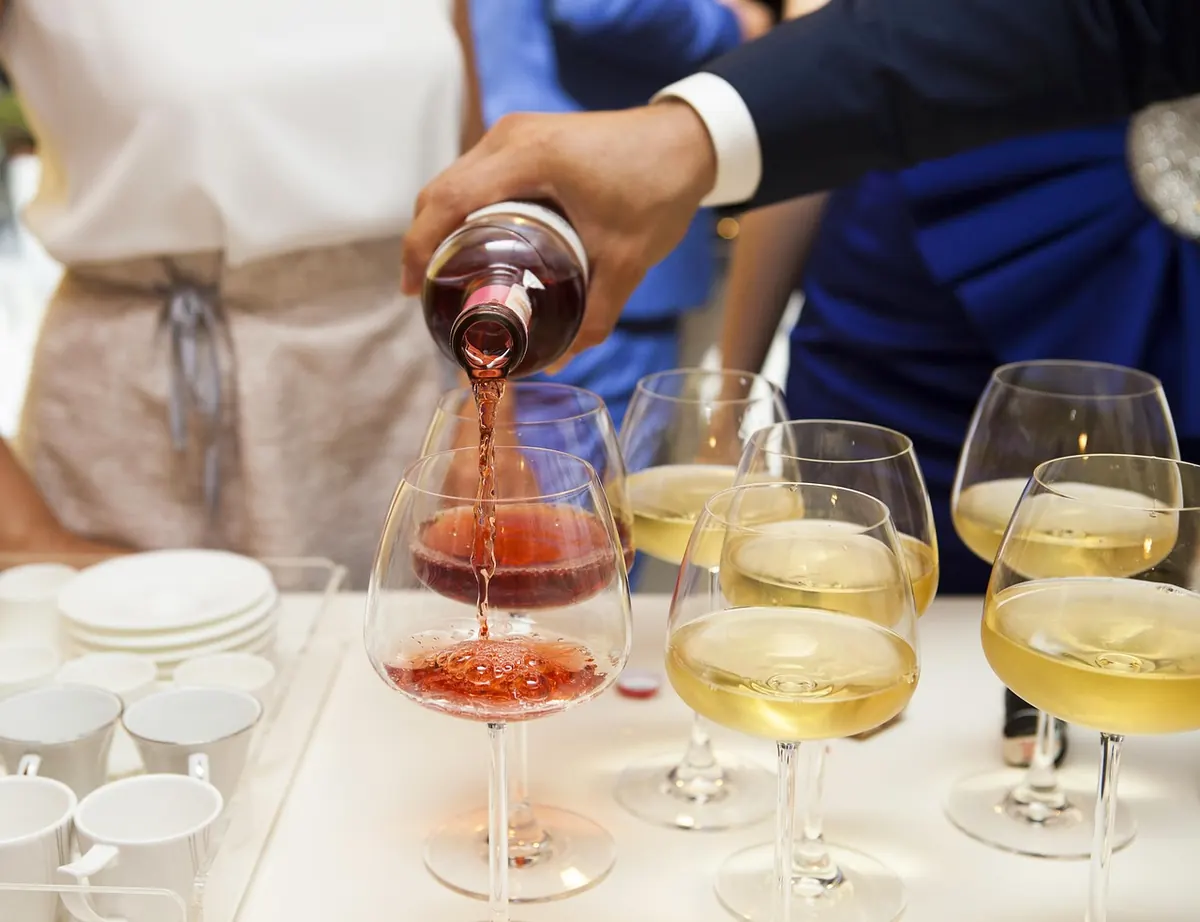
A tasting pour fills about a third of the glass — roughly to the widest part of the bowl, never above it. Two reasons, both practical. The empty space above the wine is where aromas collect, and you need room to move the wine without redecorating the tablecloth.
If you are working through several bottles, keep the pours small, four or five sips' worth. You can always pour again. What you cannot do is un-taste the third glass that was too full, too warm, and finished out of politeness. A wine glass is a tool, not a tumbler.
Treating the Aroma as a Warm-Up
Most of what we call taste is actually smell. Beginners often take one quick sniff and move straight to the sip, which is like reading the first line of a letter and guessing the rest.
Slow it down with a simple rhythm: two short sniffs, a pause, then one more. Do not sniff continuously. The nose dulls within seconds of constant work, and if you have ever put your nose in a glass and come up with nothing, that is usually why — you kept sniffing instead of stopping.
Then smell the glass again after you swallow. An empty glass carries the finish in concentrated form, and it often shows the barrel, the earth, or the bitter edge that the wine itself hid.
On vocabulary, start plain. Cherry, lemon peel, butter, bread crust, wet stone, tar, black pepper. Those words are accurate and useful. Chasing "cassis and cigar box" before you have the basics is how people talk themselves out of perfectly good observations. A useful exercise is to open two wines of the same colour side by side and describe only the differences — the comparison does most of the work for you.
Rushing the Finish
The finish is everything after the swallow: the flavour that lingers, the texture, the way your mouth dries or waters. It is where a lot of the information lives, and it is the part nearly everyone skips on the way to the next glass.
Put the glass down. Count to five, then to ten, and ask three questions:
- Does the flavour stay, or does it vanish the moment I swallow?
- Does it change — fruit turning to warm spice, or to something bitter like almond skin?
- Does my mouth feel dry, and for how long?
Take a young, tannic red. If your gums feel sandpapery for twenty seconds after the wine is gone, the wine has told you something concrete: it wants food, or another year or two in the bottle, or a good hour in a decanter. You would never learn that from a fast sip.
Tasting Too Many Wines at Once
Five or six wines is a generous tasting for anyone who is still learning. Beyond that, the palate dulls, and the notes start repeating themselves. It is not a failure of concentration; it is how taste works after a certain volume of tannin and acid.
Watch for the signs that your palate has quietly left the room:
- Everything starts to taste like the same red, or the same white.
- You notice alcohol and not much else.
- Your notes shrink to "nice" and then stop altogether.
- The last wine seems wonderful mainly because it is the last wine.
The fixes are simple and unglamorous. Keep water within reach and drink as much of it as you do wine. Plain bread or unsalted crackers reset the mouth better than cheese, which coats it. Spit, especially if you are taking notes — a spittoon is not a sign of disapproval. Order your bottles sensibly: whites before reds, dry before sweet, light before heavy. And if you stop learning anything, stop tasting. Revisit a wine you liked a day later instead; it will taste different, and that difference is worth more than the seventh sample.
Worrying About the "Right" Answer
There is no answer key at the bottom of the glass. Two careful tasters can smell different things in the same wine and both be right, because smell is memory, and memories differ.
The habit to break is naming before noticing. Taste the wine first, describe it in your own words, and only then look at the label. Doing it the other way round means you spend the whole glass confirming what the bottle already told you. Blind tasting, by the way, is not a talent people are born with; it is built slowly through deliberate comparison, and it is meant to be practised, not passed.
A Short Checklist for Your Next Glass
Tasting well is mostly a matter of pace. Before you pick up the bottle, run through this once:
- Pour to a third of the glass, no more.
- Swirl four slow circles, on the table if you are unsure.
- Two short sniffs, pause, one more.
- Take a small sip and let it reach the whole mouth.
- Wait ten seconds before you swallow or spit, and notice what stays.
- Smell the empty glass, then write one honest sentence about the wine.
Do that three times in one evening and you will have learned more than most people pick up in a year of drinking quickly. The wine has been ready all along. It only needed the room to speak.
Photo: Brett Jordan / Pexels